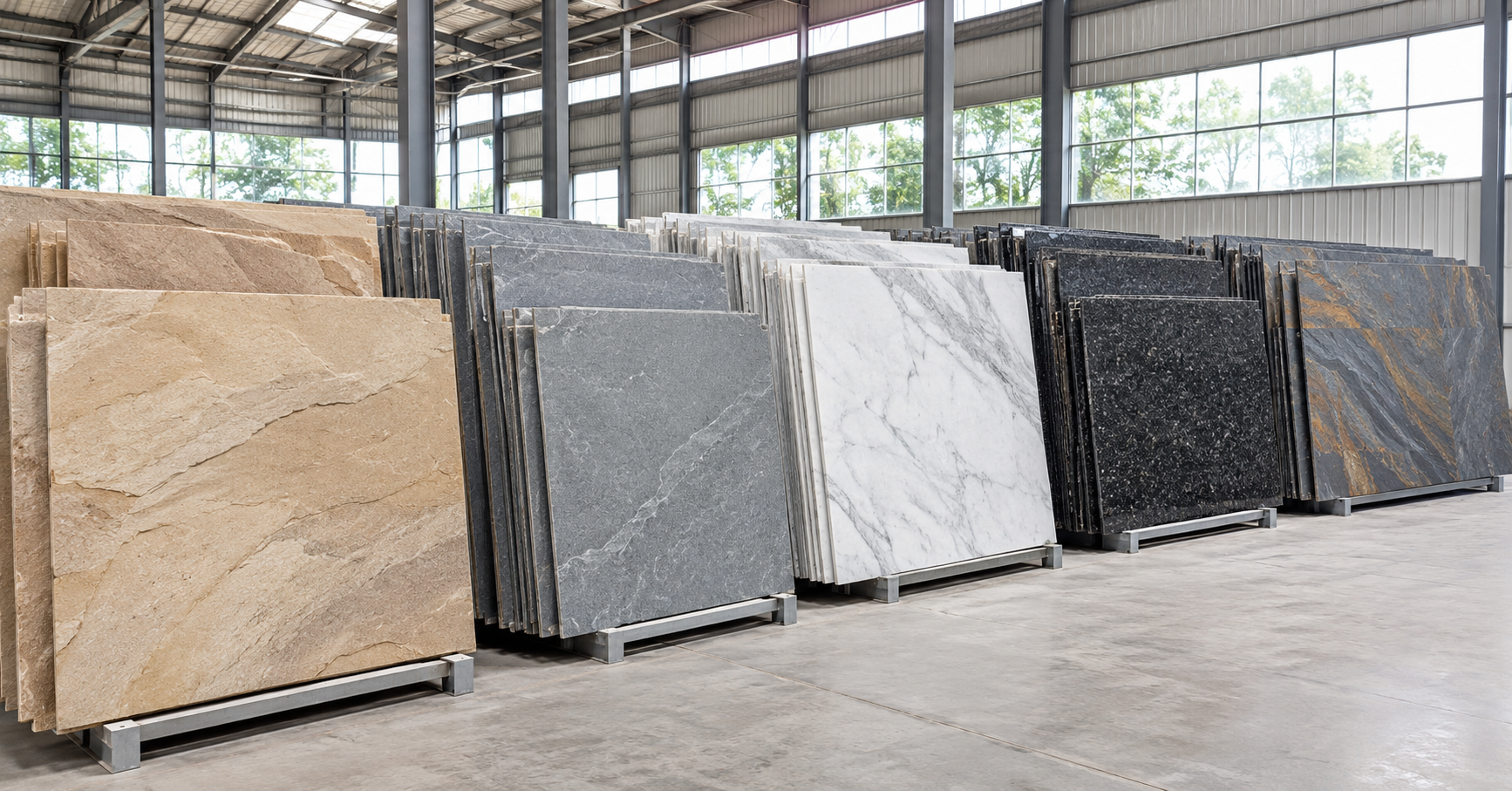
How to order natural stone from India is important for international buyers planning residential, commercial, landscaping, or architectural projects. India is a popular sourcing destination for natural stone because of its wide selection of materials, different finishes, and established stone processing industry. However, importing stone requires proper planning, accurate product specifications, and clear communication with your supplier.
Whether you are purchasing sandstone for outdoor paving, limestone for flooring, granite for commercial applications, or marble for interior decoration, understanding the purchasing process can help you avoid unnecessary mistakes.
At Alis Stones, we supply more than 70 varieties of natural stone for different applications and project requirements. This guide explains how to order natural stone from India, what information to prepare, how to understand export pricing, and what to expect before your shipment leaves India.
Step 1: How to Order Natural Stone from India by Choosing the Right Material
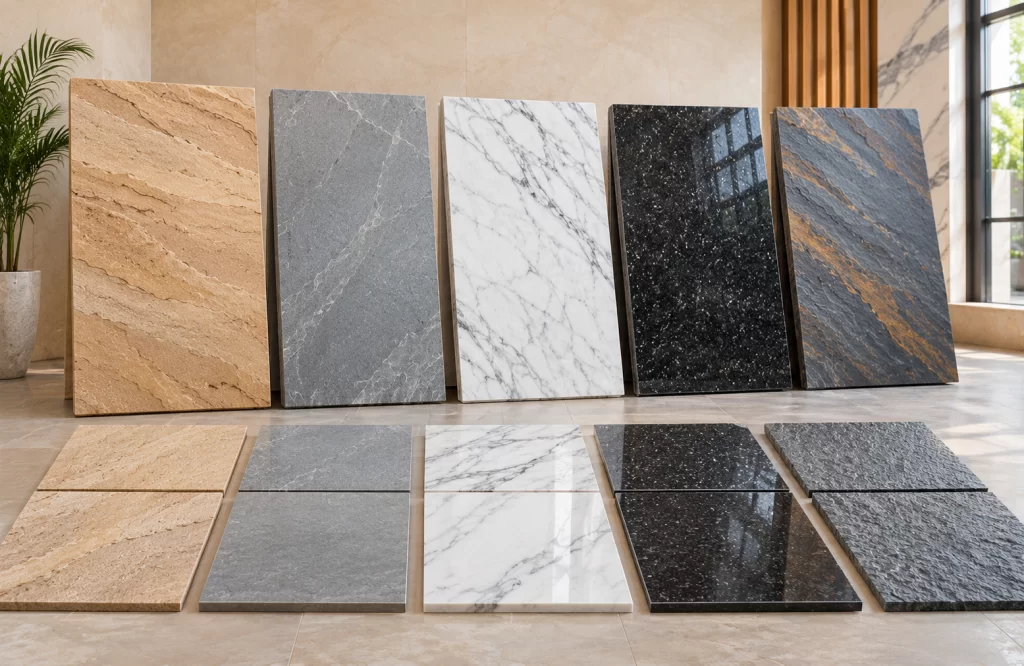
The first step is selecting a natural stone that matches your project requirements. Different stone varieties have different colours, textures, patterns, and physical characteristics. Consider the installation area and intended application before choosing a material.
Some popular natural stone varieties available from India include:
- Sandstone: Commonly used for outdoor paving, garden pathways, patios, landscaping, and wall applications.
- Limestone: Suitable for flooring, wall cladding, patios, and architectural projects.
- Granite: Known for its strength and durability, making it useful for countertops, flooring, and commercial applications.
- Marble: Frequently selected for interior flooring, decorative surfaces, and premium architectural projects.
- Slate: Used for flooring, wall cladding, landscaping, and decorative applications because of its distinctive natural texture.
At Alis Stones, buyers can explore different varieties through our sandstone, limestone, granite, and marble collections.
After selecting the stone, decide on the surface finish. Common options include natural, honed, polished, and flamed finishes. Each finish provides a different appearance and surface texture.
For example, a natural or flamed finish may be suitable for certain outdoor applications, while polished and honed finishes are frequently selected for interior projects.
Before confirming your selection, discuss the intended application and finish with your supplier. This is an important part of understanding how to order natural stone from India correctly.
Step 2: Confirm Stone Sizes, Thickness, and Quantity
Accurate measurements are essential when purchasing natural stone internationally. Dimensions and quantities influence the quotation, cutting requirements, packaging, and shipping arrangements.
Before requesting a quotation, prepare the following details:
- Required length and width in millimetres.
- Preferred thickness of each product.
- Quantity required for every size.
- Total project area in square metres.
- Special cutting or edge requirements.
- Preferred packaging arrangements, if known.
If your project requires multiple dimensions, list each size separately with its corresponding quantity. Avoid providing only a total area without explaining the individual product requirements.
It is also advisable to order additional material for cutting, installation adjustments, and possible breakage. For straightforward layouts, buyers often allow approximately 5% extra material, although the actual requirement depends on the project design.
When learning how to order natural stone from India, remember that accurate measurements help suppliers understand your requirements and prepare a more suitable quotation.
Step 3: Request Photos of the Actual Stone Lot
Natural stone is a natural material, so its colour, veining, texture, and patterns can vary between blocks and batches. A photograph on a website gives you an idea of the product, but it may not represent the exact material available for your order.
Before approving your purchase, request recent photographs of the actual stone lot.
You can ask your supplier for:
- Wide photographs showing the available material.
- Close-up pictures of the surface texture and colour.
- Images of different pieces from the same batch.
- Short videos showing the stone from multiple angles.
- Physical samples when colour matching is important.
For large residential and commercial projects, checking samples can be particularly useful. It helps you understand natural variations before ordering larger quantities.
This step is especially important when considering how to order natural stone from India for projects that require a consistent overall appearance.
Step 4: Understand FOB and CIF Pricing Terms
Before accepting a quotation, understand what the quoted price includes. International stone shipments commonly use FOB and CIF pricing terms.
FOB (Free On Board)
Under FOB terms, the seller is responsible for delivering the goods and loading them onto the nominated vessel at the agreed port of shipment. The buyer generally arranges the main sea freight and insurance.
CIF (Cost, Insurance and Freight)
Under CIF terms, the seller arranges and pays for the cost of the goods, sea freight, and required insurance up to the agreed destination port. The buyer remains responsible for import clearance and other applicable destination charges.
The right option depends on your shipping arrangements and business requirements. If you already work with a freight forwarder, FOB may be suitable. If you prefer the supplier to arrange the main sea freight and insurance, CIF may be more convenient.
When requesting a quotation, provide your destination country and port. This allows the supplier to calculate the appropriate shipping costs.
Understanding these terms is an important part of how to order natural stone from India without confusion about transportation responsibilities and additional charges.
Step 5: Understand Natural Stone Export Packing
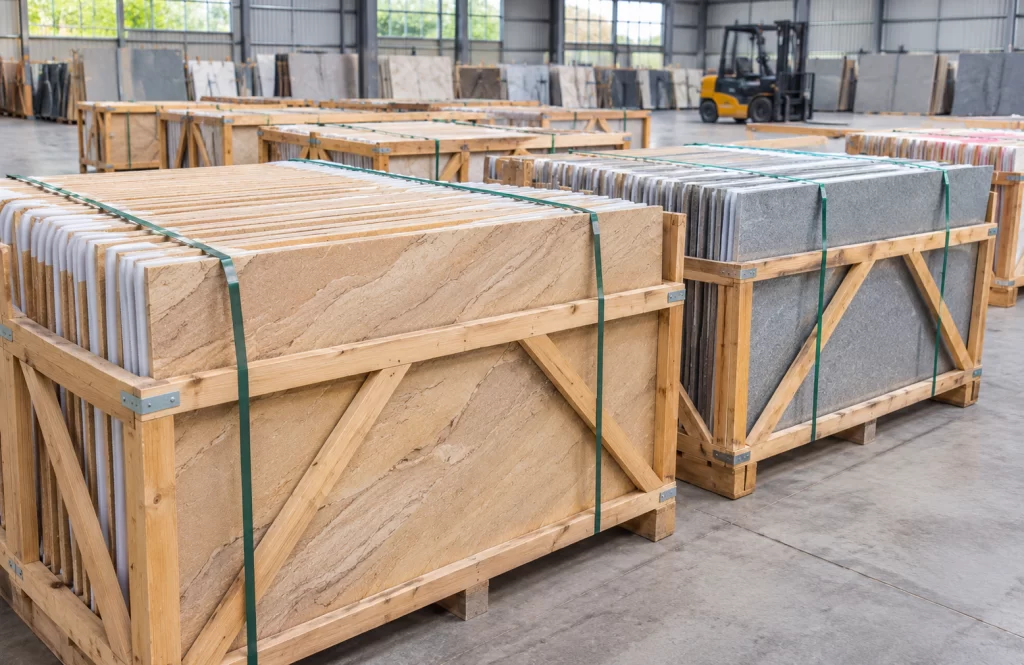
Proper packaging is essential when shipping natural stone internationally. Stone products are heavy and can become damaged if they are not secured correctly during transportation.
Depending on the product dimensions and shipping requirements, natural stone is generally packed using:
- Strong wooden crates.
- Suitable wooden pallets.
- Protective materials between individual stone pieces.
- Proper strapping and securing materials.
For international shipments, wooden packaging materials may need to comply with ISPM 15 requirements, including applicable heat treatment and marking regulations.
Buyers should confirm their destination country’s packaging requirements with their customs or import agent before shipment.
Container loading is another important consideration. Stone products must be arranged and secured appropriately to reduce movement during transportation.
For additional information about product preparation and transportation, visit our packing and delivery page.
Step 6: Prepare the Required Shipping Documents
Shipping documentation is an important part of importing natural stone from India. Missing or incorrect paperwork can create delays during transportation and customs clearance.
Common export and shipping documents include:
- Commercial Invoice: Contains the product description, quantity, price, and transaction details.
- Packing List: Provides information about packages, dimensions, weight, and shipment contents.
- Bill of Lading: Serves as the shipping document issued by the carrier.
- Certificate of Origin: Identifies the country where the exported goods originate.
The exact documentation depends on your destination country, product classification, and applicable import regulations.
Before shipment, share your customs agent’s document requirements with your supplier. This allows the necessary paperwork to be prepared and reviewed in advance.
When planning how to order natural stone from India, never leave documentation discussions until the last minute. Preparing the required details early can help prevent avoidable shipping delays.
Step 7: Confirm Your Order Before Shipment
After selecting the material and agreeing on the quotation, review all order details before giving final approval.
Check the following information:
- Stone variety and colour.
- Surface finish and product specifications.
- Dimensions and thickness.
- Quantity and total square metres.
- Agreed pricing and payment conditions.
- FOB or CIF shipping terms.
- Destination port and packaging arrangements.
- Expected production and shipping timeline.
- Required export and import documents.
Request written confirmation of the final specifications. Keep a copy of the approved quotation and order details for future reference.
A clear confirmation process helps both the buyer and supplier understand their responsibilities before production and shipment begin.
Quick Checklist: How to Order Natural Stone from India
Before confirming your international purchase, review these important points:
- Selected the appropriate natural stone variety.
- Confirmed the colour, finish, and surface texture.
- Prepared accurate dimensions and thickness requirements.
- Calculated the required quantity in square metres.
- Reviewed photographs or samples of the actual material.
- Confirmed the quotation and shipping terms.
- Discussed export packing and container arrangements.
- Checked the required shipping documents.
- Received written confirmation of the final order.
Following this checklist helps buyers organize their requirements and communicate more effectively with their suppliers.
Start Your Natural Stone Order with Alis Stones
Understanding how to order natural stone from India becomes easier when you prepare your specifications and work with a supplier who understands international stone requirements.
At Alis Stones, we help buyers discuss their natural stone requirements and explore suitable options for different projects. Whether you need sandstone, limestone, granite, marble, or another natural stone variety, providing accurate information helps us understand your needs.
To request a quotation, share the following details:
- Preferred stone type and colour.
- Required dimensions and thickness.
- Surface finish.
- Total quantity or project area.
- Destination country and shipping port.
- Special cutting or packaging requirements.
Our team can review your specifications, discuss available options, and provide a written quotation based on your requirements.
Visit Alis Stones to contact our team through the website or WhatsApp. Share your project details and take the first step towards planning your natural stone import order from India.
Frequently Asked Questions About How to Order Natural Stone from India
What Is the Minimum Order Quantity for Natural Stone?
The minimum order quantity depends on the stone variety, dimensions, thickness, and product availability. Some products may be available in smaller quantities, while others are more suitable for larger shipments or full containers.
Share your required dimensions and quantity with the supplier to confirm whether the order can be shipped independently or combined with another shipment.
How Long Does It Take to Receive a Natural Stone Order from India?
The delivery timeline depends on product availability, cutting and processing requirements, packaging, port arrangements, and shipping schedules.
Your supplier should provide an estimated production and shipping timeline in the written quotation before you confirm the purchase.
Can I Inspect Natural Stone Before It Ships?
Yes. You can request recent photographs and videos of the actual material before the container is loaded.
If you have a representative or inspection agent in India, they may also be able to inspect the stone in person. For larger orders, an inspection before shipment can help you review the material and packaging arrangements.
Who Handles Customs Clearance in My Country?
Importers generally arrange customs clearance through their own customs broker or clearing agent.
Your agent can explain the applicable duties, taxes, documentation, and import requirements in your country. Sharing these requirements with your Indian supplier before shipment helps prevent avoidable paperwork issues.
What Information Should I Provide When Requesting a Stone Quotation?
Provide the stone type, preferred colour, dimensions, thickness, surface finish, quantity, and destination port. If you need multiple sizes, list each dimension separately.
Also mention any special cutting, packaging, or inspection requirements. Complete specifications help the supplier prepare a more accurate quotation.
Is Natural Stone from India Suitable for International Projects?
Natural stone from India is used in residential, commercial, landscaping, and architectural applications. However, suitability depends on the particular stone variety, technical characteristics, finish, installation environment, and maintenance requirements.
Discuss the intended application with your supplier before placing an order.
What Should I Check Before Confirming My First Import Order?
Before confirming your first purchase, review the material specifications, actual stone photographs, quantity, pricing, packaging, shipping terms, and documentation requirements.
Make sure all important details are included in the written quotation or order confirmation. Clear communication before production helps make the importing process more organized and predictable.